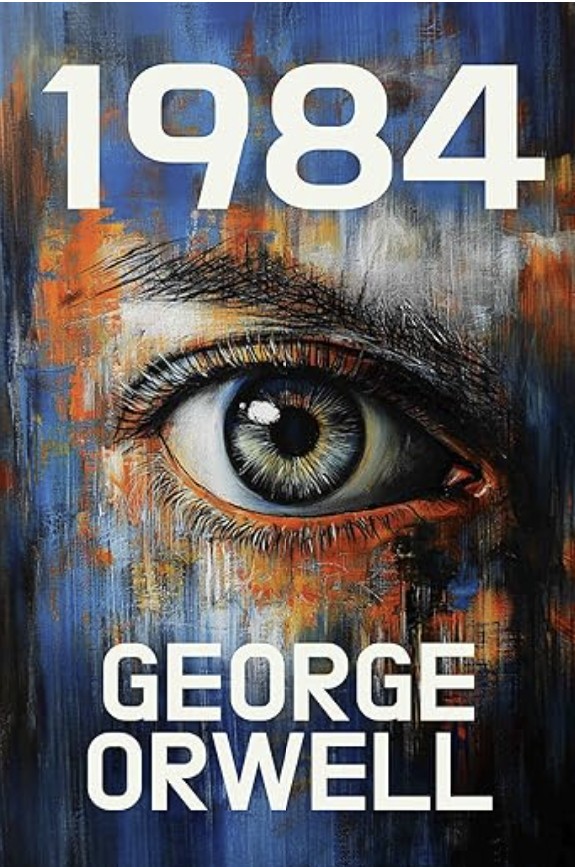
“This AI Book MRI explores what this story is really about beneath the surface — who it’s for, what it asks of the reader, and what kind of experience it delivers.”
Book Overview
Title: 1984
Author: George Orwell
Genre: Dystopian / Political Fiction
Publication Date: 1949
Format: Novel
Reader Match:
Your match signal is personalized when you complete the Reader Q&A.
👉Get your Reader Match (60 sec. Q&A)
🔎 AI Book MRI — Quick Scan
Overall Signal: Strong
Best For: Readers interested in psychological tension, control systems, and philosophical fiction
Pacing & Tone: Moderate pacing, dark tone
MRI Verdict (Quick):A psychologically immersive work that reframes power as something that reshapes truth itself
Genre Signal: Literary/Dystopian Fiction — A pressure-filled narrative exploring control, perception, and the erosion of individual reality
Reader Match Summary — MRI #551
This is a strong match for readers who are comfortable with sustained psychological pressure and themes of control, truth distortion, and loss of autonomy
📚Learn How AI Book MRI Classifies Stories ↗
The full MRI analysis below explores narrative style, thematic depth, and the overall reading experience.
🧠 Concept Strength
Most people think this is a story about surveillance. What often gets missed is that it’s really about control over reality itself.
The core idea is not just that people are watched, but that they can be made to doubt what they see, remember, and believe. The concept becomes more unsettling over time because it moves beyond external control and into internal compliance. Rather than asking “What if someone is watching you?” the book asks, “What if you eventually agree with what you’re told, even when you know it’s false?” That shift is what gives the story its lasting weight.
📘 Narrative Execution
The story doesn’t rely on action—it relies on pressure.
The narrative unfolds through a steady tightening of psychological constraints. There are no large-scale twists driving momentum; instead, the tension builds through limitation, restriction, and inevitability. The reader is placed in a position where escape never feels realistic, which creates a sustained sense of unease. This approach makes the experience less about what happens next and more about how long the character can endure what is already happening.
🎯 Reader & Market Fit
This lands harder now than it did when it was written.
Modern readers bring a different context to the story, particularly around information control, digital environments, and the shaping of narratives. The book resonates most with readers who are interested in how systems influence perception and behavior. It is not designed for casual reading—it demands attention and emotional tolerance for discomfort. Those willing to engage with its ideas tend to find it far more relevant than expected.
🪶 Title & Story Effectiveness
The title has become shorthand—but the meaning behind it is deeper than most assume.
“1984” is often used as a label for surveillance or authoritarianism, but within the story it represents something more complete: a fully realized environment where control has extended into thought itself. The title’s cultural weight can lead readers to believe they already understand the book, but the actual experience reveals a more layered and unsettling interpretation of power.
🚫 Who This Book Is Not For:
Readers looking for fast pacing, uplifting themes, or clear resolution may find this difficult to engage with. It is intentionally uncomfortable and offers little relief from its central tension.
🧭 Full MRI Verdict
Overall Signal: Strong
Primary Issue: Emotional heaviness may limit accessibility for casual readers
Secondary Issue: Lack of traditional plot movement may feel slow
Hidden Strength: Deep psychological immersion and long-term thematic impact
Best Path Forward: Best approached as a conceptual experience rather than a traditional narrative
🔎 Explore More:
⚠️ Disclaimer
This AI Book MRI is an analytical opinion based on publicly available information and does not guarantee sales performance or market outcomes.