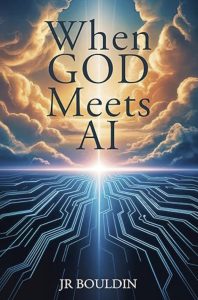
An AI Ethics & Philosophical Fiction Analysis
Is When God Meets AI worth reading?
This in-depth book review and AI Book MRI analysis examines genre strength, narrative execution, AI ethics themes, and reader fit to help you decide.
Author: Joe Bouldin
Genre: Philosophical Fiction / AI Ethics
Publication Date: 2025
Format: Kindle Unlimited / Paperback
🧠 Reader Match:
Your match signal is personalized when you complete the Reader Q&A.
👉Get your Reader Match (60-sec Q&A)
“This AI Book MRI explores what this story is really about beneath the surface — who it’s for, what it asks of the reader, and what kind of experience it delivers.”
Overall Signal:
A serious, idea-driven novel that explores human imagination, AI, and moral responsibility through a calm, reflective, and theologically informed speculative lens.
Best For:
Readers who enjoy thoughtful, character-centered speculative fiction that blends philosophy, spirituality, and emerging technology — especially those interested in AI ethics, consciousness, and meaning rather than action-driven plots.
Pacing & Tone Note:
The novel prioritizes intellectual and moral exploration over fast-moving plot, which may limit appeal for readers seeking conventional sci-fi pacing or clear genre conventions..
MRI Verdict (Quick):
Worth reading for depth, originality, and relevance — best suited for patient readers who value insight, restraint, and big questions over momentum.
The full AI Book MRI below expands on narrative style, thematic depth, and what this book is likely to feel like when read.
📚 Genre Signal
Genre Strength: 🟢 A — Clear & Dominant Signal
Primary Genre: …
Reading Style: …
Reader Fit: …
Links…
Genre Framework — How AI Book MRI Classifies Stories →
🧩 Reader Match Summary — MRI #001
This book is likely to resonate most strongly with readers who:
- Are curious about theological or philosophical implications of AI, rather than technical forecasts
- Enjoy thought experiments that explore belief, meaning, and authorship in a speculative frame
- Prefer ideas-led narratives that invite reflection rather than deliver firm answers
- Are open to fiction that blends spiritual inquiry with emerging technology
Readers seeking fast-paced plot escalation, clear genre conventions, or purely secular science fiction may find the experience more contemplative than expected.
When God Meets AI
🧠 Concept Strength
What is this book really about beneath the surface — and how effectively does the core idea support the emotional and thematic weight of the story?
This novel grounds its speculative and metaphysical elements in a deeply human story of failure, regret, and moral reckoning. Rather than opening with abstraction or cosmic stakes, it begins with lived experience — corporate burnout, broken friendships, financial collapse, and the quiet humiliation of unrealized ambition.
The introduction of Shelly is intentionally restrained. She is not positioned as a rescuer or commanding divine force, but as a facilitator — someone who appears at moments of fracture to preserve agency rather than override it. This framing aligns the book more with moral inquiry than salvation narrative and gives the metaphysical elements emotional credibility.
The speculative layer emerges organically from the human story instead of dominating it. The result is a concept that feels earned rather than imposed, allowing readers to engage with larger ideas only after trust has been established through realism.
Net effect: A strong conceptual foundation where the extraordinary grows naturally out of the ordinary.
📘 Narrative Execution
How the story is told — including pacing, structure, voice, scene construction, and emotional flow — and how those choices shape the reading experience.
The opening is dense, immersive, and emotionally weighted. The prose favors accumulation over acceleration, layering memory, consequence, and internal reflection rather than relying on early plot hooks or external conflict.
Scenes are built through concrete detail and interiority — sorting mail, digging trenches, watching relationships dissolve quietly rather than explosively. Dialogue is sparse, and action is often retrospective. Tension comes less from anticipation of events and more from understanding how a life reached its current state.
This approach creates authenticity and emotional gravity, but it also signals that the novel demands patience. Readers accustomed to rapid pacing or early narrative payoff may find the opening slow, while attentive readers are likely to find the restraint purposeful and resonant.
Net effect: High emotional credibility and coherence, balanced against a deliberate pacing style that rewards attentiveness rather than urgency.
🎯Thematic Core
Who this book is most likely to resonate with — and where it may struggle to align with common genre expectations or marketplace browsing behavior.
The book occupies a space between philosophical fiction, contemporary realism, and speculative metaphysics. It does not align cleanly with commercial science fiction, religious fiction, or mainstream drama.
Its strongest audience includes:
- readers drawn to meaning-driven narratives
- readers who value emotional realism over plot mechanics
- audiences open to spiritual or metaphysical ideas presented quietly
- readers interested in moral consequence, dignity, and personal reckoning
This positioning gives the book a clear identity but limits algorithmic discoverability in marketplaces that favor immediate genre signaling and fast engagement.
Net effect: Strong thematic identity with weak passive discoverability, requiring intentional reader alignment rather than broad exposure.
🪶 Emotional Texture
How well the title, framing, and outward presentation reflect the book’s deeper intent — and whether they help or hinder first-impression alignment.
The title reflects the novel’s understated, ironic tone and aligns well with its thematic direction. However, its subtlety may obscure the emotional and metaphysical depth for casual browsers scanning quickly.
The story itself delivers seriousness and introspection, but it does so gradually. Readers expecting early spectacle, overt metaphysical explanation, or fast plot escalation may underestimate the scope of what the novel is building toward.
Externally clarifying why this story matters — without altering its voice — could help bridge the gap between its depth and reader expectations.
Net effect: Honest alignment between title and content, with room for stronger outward framing.
🧭 Full MRI Verdict
Overall Signal
A reflective, emotionally grounded novel that prioritizes authenticity, moral inquiry, and human consequence over speed or spectacle.
Primary Issue
Discoverability. The quiet tone and slow-build structure make it difficult to surface organically in fast-scanning, algorithm-driven marketplaces.
Secondary Issue
Reader expectations. The opening demands patience and emotional engagement, which may filter out readers seeking immediate payoff.
Hidden Strength
Credibility. The lived-in realism and refusal to oversimplify failure give the story weight and long-term resonance.
Best Path Forward
Preserve the book’s voice and intent while sharpening external signaling — through framing, description emphasis, and category alignment — so the right readers recognize themselves in the story earlier.
🔎 Explore More:
⚠️ Disclaimer
This AI Book MRI is an analytical opinion based on publicly available information and does not guarantee sales performance or market outcomes.