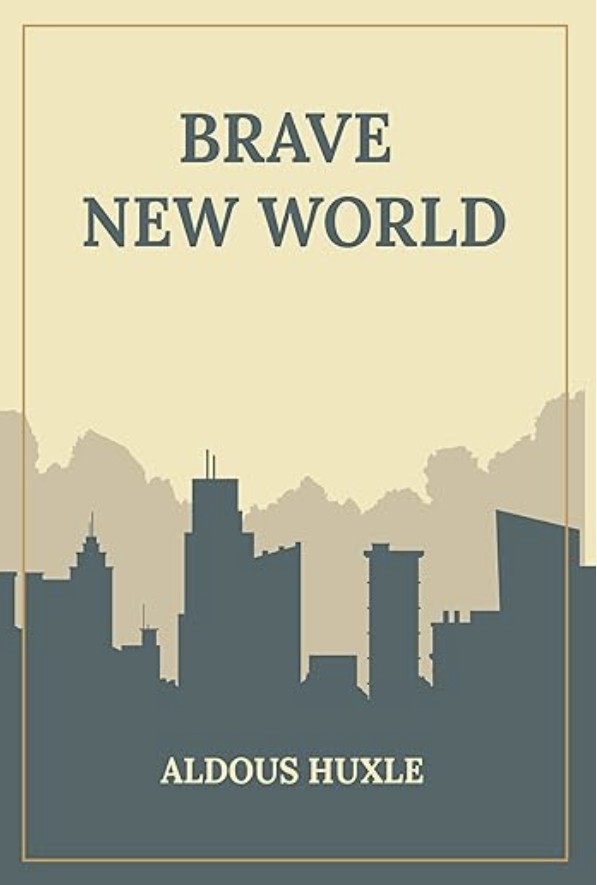
“This AI Book MRI explores what this story is really about beneath the surface — who it’s for, what it asks of the reader, and what kind of experience it delivers.”
Book Overview
Title: Brave New World
Author: Aldous Huxley
Genre: Literary Fiction / Dystopian Fiction
Publication Date: 1932 (Modern Editions Available)
Format: Kindle
Reader Match:
AI Book Strength:
✓ Very Strong
Your match signal is personalized when you complete the Reader Q&A.
👉Get your Reader Match (60 sec. Q&A)
🔎 AI Book MRI — Quick Scan
Overall Signal: Strong
Best For: Readers interested in thought-provoking dystopian fiction that explores control, conformity, and the trade-offs between stability and individual freedom.
Pacing & Tone: Moderate pacing with a cool, clinical tone that contrasts with underlying unease and philosophical tension.
MRI Verdict (Quick): A concept-driven dystopian novel that examines a future built on engineered happiness and social control, rewarding readers who engage with its ideas over action.
Genre Signal: Dystopian literary fiction centered on societal structure, philosophical themes, and ethical questions rather than plot-heavy progression.
Reader Match Summary — MRI # 559
This book is best suited for readers who enjoy idea-driven narratives and speculative worlds that challenge assumptions about society and human nature. Those drawn to philosophical themes and social commentary will find it engaging, while readers seeking emotional depth or character-driven storytelling may find it more detached.
📚Learn How AI Book MRI Classifies Stories ↗
The full MRI analysis below explores narrative style, thematic depth, and the overall reading experience.
🧠 Concept Strength
A strong concept examines how well the core idea of the book is defined, compelling, and capable of sustaining interest throughout the story.
The novel presents a future society where stability is achieved through conditioning, consumption, and the suppression of individuality. The central idea—sacrificing freedom for comfort—is both clear and unsettling, making the concept immediately compelling. Huxley explores how control can be maintained not through force, but through engineered satisfaction, creating a vision that feels both distant and eerily plausible.
📘 Narrative Execution
Narrative execution evaluates how effectively the story is told, including structure, character development, and the author’s ability to maintain engagement.
The narrative unfolds through multiple perspectives, gradually revealing the structure and values of the society. While the plot itself is relatively straightforward, the strength lies in how the world is introduced and contrasted with individual experience. Character development serves the larger ideas rather than driving the story, which may feel less emotionally engaging but reinforces the conceptual focus. The pacing remains steady, with key moments highlighting the tension between conformity and individuality.
🎯 Reader & Market Fit
This section considers how well the book aligns with audience expectations, genre conventions, and overall readability.
The book fits well within the dystopian genre but stands apart due to its emphasis on psychological and societal control rather than overt oppression. It appeals to readers interested in philosophy, sociology, and speculative futures. While widely accessible in language, its detached tone and focus on ideas may limit appeal for readers seeking emotional connection or character-driven narratives.
🪶 Title & Story Effectiveness
This evaluates how well the title represents the story and contributes to reader expectations and interest.
The title, drawn from Shakespeare, carries an ironic tone that contrasts with the reality of the world presented. It suggests optimism while hinting at deeper tension, aligning well with the novel’s themes. As the story unfolds, the title takes on greater meaning, reinforcing the contrast between appearance and reality.
🚫 Who This Book Is Not For: Readers who prefer emotionally driven stories, strong character arcs, or action-oriented plots may find the narrative too detached. Those uninterested in philosophical or societal themes may struggle to stay engaged.
🧭 Full MRI Verdict
Overall Signal: Strong
Primary Issue: Limited emotional connection due to concept-first storytelling
Secondary Issue: Character development serves ideas more than personal arcs
Hidden Strength: A powerful and enduring concept that challenges assumptions about society and control
Best Path Forward: Approach the book with focus on its ideas and societal critique, allowing the themes to drive engagement rather than expecting traditional narrative depth
⚠️ Disclaimer
This AI Book MRI is an analytical opinion based on publicly available information and does not guarantee sales performance or market outcomes.