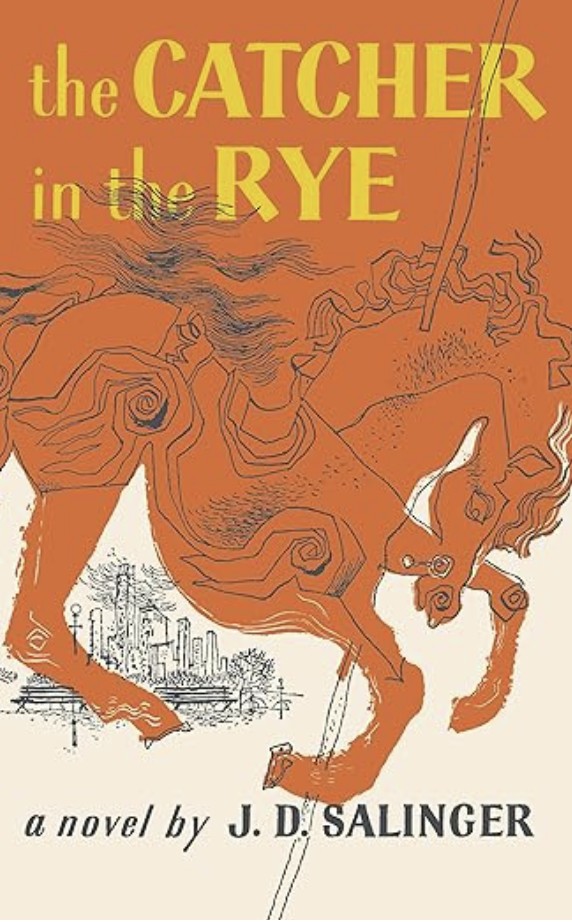
“This AI Book MRI explores what this story is really about beneath the surface — who it’s for, what it asks of the reader, and what kind of experience it delivers.”
Book Overview
Title: The Catcher in the Rye
Author: J.D. Salinger
Genre: Literary Fiction / Coming-of-Age
Publication Date: 1951 (Modern Editions Available)
Format: Kindle
Reader Match:
AI Book Strength:
✓ Very Strong
Your match signal is personalized when you complete the Reader Q&A.
👉Get your Reader Match (60 sec. Q&A)
🔎 AI Book MRI — Quick Scan
Overall Signal: Strong
Best For: Readers who connect with introspective, character-driven narratives centered on identity, alienation, and emotional honesty.
Pacing & Tone: Moderate pacing with a reflective, conversational tone that blends cynicism, vulnerability, and underlying emotional depth.
MRI Verdict (Quick): A deeply personal and voice-driven novel that captures the confusion and emotional turbulence of adolescence, resonating most with readers who value authenticity over plot.
Genre Signal: Literary coming-of-age story focused on internal conflict, perception, and emotional development rather than external events.
Reader Match Summary — MRI # 557
This book is best suited for readers who are drawn to introspective storytelling and strong narrative voice. Those who appreciate emotional nuance and psychological realism will find it compelling, while readers seeking structured plots or action-driven stories may find the pacing and focus less engaging.
📚Learn How AI Book MRI Classifies Stories ↗
The full MRI analysis below explores narrative style, thematic depth, and the overall reading experience.
🧠 Concept Strength
A strong concept examines how well the core idea of the book is defined, compelling, and capable of sustaining interest throughout the story.
At its core, the novel explores the tension between innocence and adulthood, framed through Holden Caulfield’s resistance to a world he perceives as artificial. The concept is simple but powerful: a young individual struggling to reconcile his ideals with reality. What gives it lasting impact is its universality—this sense of disconnection and search for authenticity resonates across generations, making the concept both enduring and deeply relatable.
📘 Narrative Execution
Narrative execution evaluates how effectively the story is told, including structure, character development, and the author’s ability to maintain engagement.
The narrative is driven almost entirely by Holden’s voice, which is both the novel’s greatest strength and its defining feature. His conversational style creates immediacy and intimacy, pulling the reader directly into his perspective. While the plot itself is minimal—structured around a series of encounters and observations—the consistency of the voice sustains engagement. The lack of traditional structure may feel meandering at times, but it reinforces the authenticity of Holden’s experience.
🎯 Reader & Market Fit
This section considers how well the book aligns with audience expectations, genre conventions, and overall readability.
The novel has broad recognition but a more selective appeal. It resonates most strongly with readers who appreciate psychological realism and character-driven storytelling. Its themes of alienation and identity make it particularly impactful for younger readers or those reflecting on transitional life stages. However, its informal tone and lack of plot progression may limit its appeal for readers who prefer more structured narratives.
🪶 Title & Story Effectiveness
This evaluates how well the title represents the story and contributes to reader expectations and interest.
The title reflects a symbolic role Holden imagines for himself—protecting innocence in a world he finds corrupt. While not immediately literal, it captures the emotional core of the story and gains meaning as the narrative unfolds. It aligns well with the novel’s themes and reinforces its introspective nature.
🚫 Who This Book Is Not For: Readers seeking fast-paced plots, clear resolutions, or action-driven storytelling may find the narrative too slow or unfocused. Those who prefer external conflict over internal exploration may struggle to connect with the story.
🧭 Full MRI Verdict
Overall Signal: Strong
Primary Issue: Limited plot progression may feel slow or unfocused for some readers
Secondary Issue: Heavy reliance on a single narrative voice may not appeal to all audiences
Hidden Strength: Exceptionally authentic voice that captures emotional complexity and internal conflict
Best Path Forward: Approach the book as a character study, focusing on Holden’s perspective and emotional journey rather than expecting traditional plot structure
⚠️ Disclaimer
This AI Book MRI is an analytical opinion based on publicly available information and does not guarantee sales performance or market outcomes.