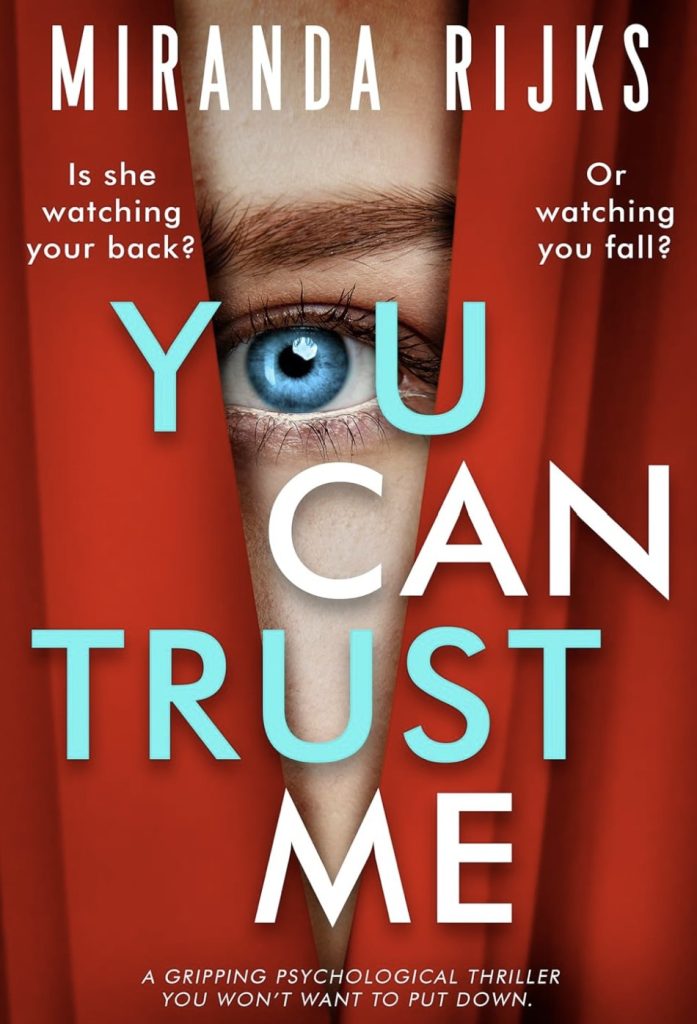
“This AI Book MRI explores what this story is really about beneath the surface — who it’s for, what it asks of the reader, and what kind of experience it delivers.”
Book Overview
Title: You Can Trust Me
Author: Miranda Rijks
Genre: Psychological Thriller
Publication Date: 2026
Format: Kindle
Reader Match:
Your match signal is personalized when you complete the Reader Q&A.
👉Get your Reader Match (60 sec. Q&A)
🔎 AI Book MRI — Quick Scan
Overall Signal:
Strong Psychological Thriller built around trust, deception, and the emotional consequences of hidden secrets.
Best For:
Readers who enjoy suspenseful psychological thrillers focused on unreliable relationships, shifting loyalties, and the tension between truth and manipulation.
Pacing & Tone Note:
Fast-moving pacing with escalating tension as revelations gradually challenge the reader’s understanding of the characters.
MRI Verdict (Quick):
A suspense-driven psychological thriller exploring how easily trust can be weaponized when hidden motives begin to surface.
📚 Genre Signal
Genre Strength: 🟢 A — Clear & Dominant Signal
Primary Genre: Psychological Thriller
Reading Style: Suspense-driven narrative centered on interpersonal deception
Reader Fit: Readers who enjoy twist-oriented psychological thrillers with shifting character loyalties.
📚 Learn How AI Book MRI Classifies Stories ↗
🧩 Reader Match Summary — MRI #096
This book aligns strongly with readers who enjoy psychological thrillers built around deception and interpersonal tension. The narrative explores how trust can become fragile when hidden agendas emerge, creating an atmosphere of escalating suspicion.
The full MRI analysis below explores narrative style, thematic depth, and the overall reading experience.
🧠 Concept Strength
What is this book really about beneath the surface — and how effectively does the core idea support the emotional and thematic weight of the story?
Trust is one of the most powerful narrative engines in psychological thrillers because it creates immediate emotional stakes. When characters begin questioning who they can rely on, tension rises quickly.
Net effect: Strong thriller premise with built-in emotional tension.
📘 Narrative Execution
How the story is told — including pacing, structure, voice, scene construction, and emotional flow — and how those choices shape the reading experience.
The story gradually reveals inconsistencies in the characters’ motivations, encouraging readers to reassess earlier assumptions as the narrative unfolds.
Net effect: Suspenseful storytelling driven by shifting perceptions.
🎯 Reader & Market Fit
Who this book is most likely to resonate with — and where it may struggle to align with common genre expectations or marketplace browsing behavior.
Psychological thrillers centered on deception and hidden motives remain extremely popular with readers seeking twist-driven narratives.
Net effect: Strong commercial alignment within the thriller market.
🪶 Title & Story Effectiveness
How well the title, framing, and outward presentation reflect the book’s deeper intent — and whether they help or hinder first-impression alignment.
The title immediately raises suspicion by emphasizing trust, a theme that psychological thrillers frequently turn upside down.
Net effect: Effective title that reinforces the story’s central tension.
🚫 Who This Book Is Not For
Readers who prefer slower literary fiction or emotionally reflective narratives may find the thriller pacing more suspense-focused than contemplative.
🧭 Full MRI Verdict
Overall Signal
Strong Psychological Thriller
Primary Issue
Relies on familiar deception-driven thriller structures.
Secondary Issue
Suspense may depend heavily on delayed revelations.
Hidden Strength
High emotional tension generated by shifting trust between characters.
Best Path Forward
Sustain reader engagement by layering unexpected psychological turns.
⚠️ Disclaimer
This AI Book MRI is an analytical opinion based on publicly available information and does not guarantee sales performance or market outcomes.